
Why Hire Commercial Cleaners: 8 Benefits for UK Workplaces
A clean workplace looks better, feels better and protects the people in it. Hiring a commercial cleaning company turns that into a routine rather than a rota of tasks that staff squeeze in around their jobs. This guide covers the main reasons UK businesses hire commercial cleaners, which sectors benefit most and what to expect from the service.
Why Businesses Hire Commercial Cleaners
1. A professional first impression
Clients and visitors judge a business within seconds. Clean entrances, reception areas and toilets show that standards matter.
2. A healthier workplace
Shared surfaces such as door handles, keyboards, kitchen taps and lift buttons carry bacteria and viruses. Regular, thorough cleaning with the right products cuts the spread of illness and can reduce sick days.
3. Better productivity and morale
A tidy, fresh smelling space helps people concentrate. Staff also notice when their workplace is looked after, which supports morale and retention.
4. Compliance with health and safety duties
UK employers must keep workplaces clean under the Workplace (Health, Safety and Welfare) Regulations 1992. A cleaning contract with a written scope and records helps show that duty is being met.
5. Trained staff and professional equipment
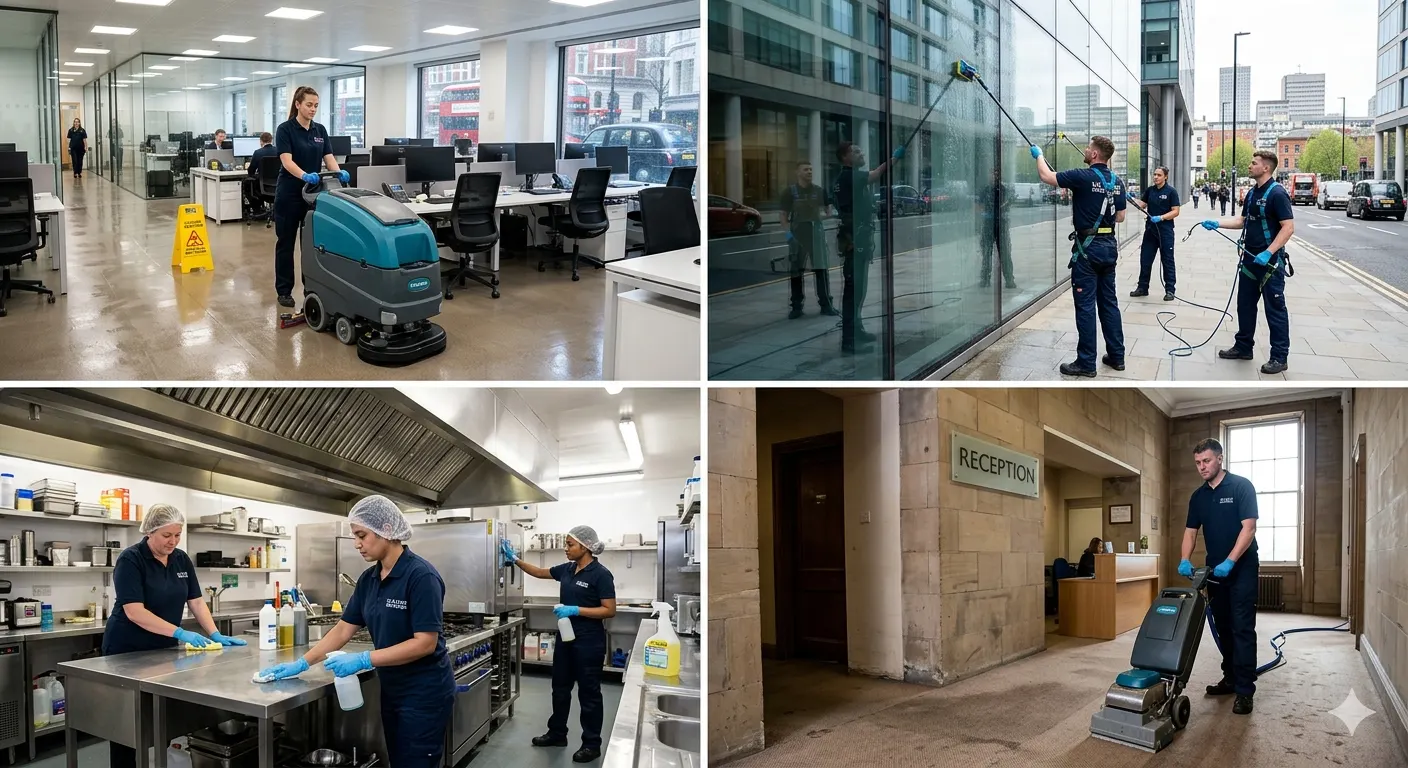
Commercial teams use industrial vacuums, colour coded cloths and products suited to each surface and sector, so cross contamination and surface damage are less likely.
6. Cleaning outside working hours
Early morning and evening visits mean cleaning does not interrupt work, and the space is ready when the team arrives.
7. Longer life for floors and furniture
Routine care removes grit and spills before they wear carpets, hard floors and upholstery. This delays replacement and keeps the building looking newer for longer.
8. Consistent results and cover
A contracted team follows a set schedule and sends cover when someone is ill, so standards do not drop during holidays or busy periods.
Which Businesses Benefit Most
- Offices and co working spaces: daily desk, kitchen and toilet cleaning.
- Retail and showrooms: floors, glass and fitting rooms that need to look right all day.
- Schools and nurseries: high touch surfaces and strict hygiene routines.
- Healthcare and clinics: infection control and clear audit records.
- Restaurants, pubs and hotels: kitchens, bars, front of house and bedrooms.
Tasks Commercial Cleaners Typically Cover
- Emptying bins and replacing liners throughout the building.
- Vacuuming carpets and mopping hard floors.
- Disinfecting desks, door handles, light switches and shared equipment.
- Cleaning and restocking toilets, washrooms and kitchenettes.
- Cleaning internal glass, entrance mats and reception areas.
- Periodic extras such as carpet cleaning, window cleaning and deep cleans.
Questions to Ask Before You Start
- Is the team vetted, trained and covered by public liability insurance?
- How are tasks and frequency written down in the contract?
- Who inspects the work and how are missed tasks fixed?
- What happens when the regular cleaner is off sick?
Signs It Is Time to Bring in a Cleaning Company
- Staff are spending working hours on cleaning tasks.
- Toilets, kitchens or entrances look tired by mid week.
- Visitors or inspectors have commented on cleanliness.
- Sick days are rising, or the team has grown beyond what a rota can cover.
- Floors, carpets and glass have not had a deep clean in over 6 months.
What to Expect From a Commercial Cleaning Service
A reputable provider starts with a site visit and a written scope that lists the tasks and frequency for each area. Staff are vetted and insured, products are matched to the surface, and a supervisor checks standards on a schedule. Our guide on how to hire a reliable commercial cleaner explains what to check before you sign.
To see how this works for your premises, visit our commercial cleaning services page.
Why Hire Commercial Cleaners FAQs
Why should a business hire a commercial cleaning company?
A commercial cleaning company gives your workplace a consistent clean from trained staff with the right equipment and products. This supports hygiene, presentation and staff wellbeing, helps meet legal cleanliness duties and frees your team to focus on their own work.
How often should a business schedule commercial cleaning?
Offices usually have daily or 3 times a week cleaning, with deeper tasks monthly or quarterly. Retail, hospitality and healthcare sites often need daily cleaning, and some need several visits a day. The right frequency depends on footfall and the type of premises.
Can commercial cleaning be done outside working hours?
Yes. Most commercial cleaners work early in the morning, in the evening or overnight so staff and customers are not disturbed. Access is arranged through keys, fobs or alarm codes, and the team follows an agreed checklist at each visit.
What industries benefit most from commercial cleaning?
Offices, retail, schools, healthcare, hospitality and warehouses all benefit from regular, professional cleaning carried out to a written scope. Sectors with high footfall or strict hygiene rules, such as clinics, restaurants and schools, gain the most because cleaning directly affects safety, inspections and customer confidence.
Is a cleaning contract flexible if my needs change?
Most commercial contracts can be adjusted. You can usually add or remove visits, change the schedule or request one off deep cleans. Agree notice periods and how changes are priced in writing before you sign, so there are no surprises later.